
Emergency call-out is for those moments when a tree problem cannot wait. High winds, saturated ground, and sudden limb failure can leave you with a hanging branch over a roof, a fallen tree blocking a driveway, or cracked limbs that feel unsafe near paths and vehicles. In these situations, you need quick action that puts safety first and avoids making the damage worse.
With SD Tree Care, emergency response focuses on making the area safe and restoring access as soon as possible. Work may involve sectional dismantling, controlled lowering with rigging ropes, or careful cutting and removal of fallen timber. Brash is cleared and processed using a wood chipper, and the site is left tidy so you are not left with a second problem to deal with. If a Tree Preservation Order or conservation area rules apply, local knowledge helps you take the right steps while still addressing immediate risk.
If you are worried about a tree after a storm, call 01403 613789 for 24/7 emergency support and clear advice on what to do next.
A partially broken limb can fall without warning, risking damage or injury where branches hang over roofs, vehicles, or paths. Even stable looking limbs may fail in further wind or rain. An emergency assessment guides safe removal using controlled lowering and proper equipment, with debris cleared so the area is secured promptly.
A fallen tree can trap vehicles and block access, often after waterlogged soil causes root failure in high winds. Incorrect cutting risks further movement and damage. Emergency response sections and removes timber safely, clears debris, and restores access quickly, with stump grinding arranged where needed to leave the area usable.
A tree that has shifted or split may fail days after a storm, even when damage seems minor. Leaning, cracks, or movement signal risk to people and property. A making safe visit assesses stability and recommends action such as pruning or dismantling, with controlled methods used and the site left tidy.
Storm debris can turn gardens into hazard zones, blocking access and hiding trip risks while leaves clog drainage and create slip hazards. Clearing unstable branches without proper equipment can cause injury. Emergency clearance removes debris and restores safe access, with follow up to prevent repeat problems.
When you call for emergency help, the first priority is making the situation safe. On arrival, an urgent risk assessment checks for hanging limbs, split stems, unstable root plates, and anything affecting roofs, vehicles, footpaths, or access routes. Weather and light conditions are considered, as well as the safest approach for cutting and lowering.
Work zones are set up using cones and barrier tape, with clear exclusion areas to protect your family, neighbours, and passers-by. If the tree is near a road or public path, additional safety measures may be used to manage movement around the site. The goal is to remove immediate hazards without causing further damage to fences, sheds, or buildings.
You get a calm, organised response that focuses on safety and clear next steps, not guesswork.
Emergency tree work is not always about removing the whole tree. In many cases, the right solution is to remove failed limbs, reduce a crown to lessen wind loading, or dismantle only the dangerous sections. This is often referred to as making safe.
Controlled methods matter in emergencies. Rigging ropes, lowering kits, and careful sectional dismantling help manage heavy limbs without dropping them onto roofs, conservatories, or garden structures. Chainsaw cutting is planned to prevent timber rolling or shifting unexpectedly. Brash is processed with a wood chipper and removed so the area is not left cluttered.
You get the safest practical outcome for the situation, with disruption kept as low as possible.
In some areas, Tree Preservation Orders and conservation area rules can apply. In an emergency, safety still comes first, but it helps to understand what needs documenting and what follow-up steps may be required. Local knowledge helps you avoid unnecessary issues while still addressing immediate risk to people and property.
If a protected tree has failed, the priority is to make it safe. After that, you can be guided on what information may be useful, such as photos of damage, the location of failure, and what work was carried out. If further work is needed beyond the emergency make-safe, it can be discussed with the right level of care.
You get practical advice that keeps you protected as well as your property.
Emergency work should not leave you with piles of brash and timber to deal with. Once hazards are controlled, debris is cleared from key areas such as driveways, paths, doorways, and garden steps. Suitable branches are chipped to reduce waste volume, and remaining timber is logged up and removed where agreed.
Paths and hard surfaces can be blown down, and visible hazards such as sharp stubs and scattered fragments are removed. If storm debris has affected hedges or garden areas, additional clearance can be completed as part of the visit or booked in as a follow-up.
You are left with access restored and a space that feels safe again, not a mess that lingers for weeks.
Emergency call-out is about immediate risk. It focuses on making safe, reopening access routes, and removing hazards that could cause injury or damage. Planned tree surgery is different. It involves shaping, maintenance pruning, and longer-term tree health work carried out in better conditions.
Sometimes an emergency visit highlights wider issues, such as decay, weak unions, or a canopy that is too heavy for the site. In those cases, a follow-up tree surgery plan can prevent repeat emergencies and reduce the chance of storm damage in the next season.
You get urgent help when you need it, plus sensible options to reduce risk going forward.
Emergency tree work is priced based on the risk level, the complexity of the job, access, and the amount of cutting and debris removal required. A hanging limb over a roof, a fallen tree across a driveway, or a split stem near a public footpath all require different safety controls, equipment, and time on site. Poor access, low light, and weather conditions can also affect what is safe to complete immediately, and what may need a follow-up visit.
SD Tree Care offers a free site visit to quote for planned work. For emergencies, you will receive clear guidance on the likely approach as soon as the situation is understood, with the aim of making the area safe quickly and leaving it tidy. If additional services such as stump grinding, garden maintenance, or hedge cutting are needed afterwards, these can be included in a clear plan.
For urgent help, call 01403 613789. Emergency support is available 24/7.

You should call when there is an immediate risk to people or property. Common examples include a branch hanging over a roof or driveway, a tree leaning after high winds, split stems, or a fallen tree blocking access. If you can see fresh cracking, movement at the base, or branches resting on buildings, it is best to treat it as urgent. Avoid standing underneath the tree or attempting showing off a quick fix with a ladder or chainsaw. Call 01403 613789 and describe what you can see, where the tree is, and whether access is blocked so the right response can be arranged.
An emergency is any tree issue that could cause injury or damage soon. That includes hanging limbs, uprooted trees, cracked branches, trees resting on roofs, and unstable stems near paths or parking areas. A fallen tree across a driveway or road can also be an emergency because it restricts access and can create secondary hazards. Even if the storm has passed, trees can fail later when damaged sections give way. If you are unsure, it is safer to call and get advice, especially if the tree is near a building, vehicle, or public area.
Attendance depends on severity, location, and demand during storm periods, but the aim is to respond as quickly as possible to hazards affecting roofs, access routes, and public areas. The best way to speed things up is to share clear information when you call, such as whether the tree has fallen, whether anything is hanging, and whether anyone is at risk. If you can safely provide photos, that can help confirm the right equipment needed. For urgent hazards, call 01403 613789 as soon as you notice the issue.
Yes. Many emergency jobs are resolved with making safe work rather than full removal. That might involve removing a failed limb, reducing a crown to lessen wind loading, or dismantling only the unstable sections. Controlled lowering with rigging ropes helps prevent further damage to roofs, fences, and conservatories. If the tree is still viable after the hazard is removed, a follow-up plan can be discussed for longer-term maintenance, such as crown reduction or selective pruning. This approach often saves disruption and preserves trees where possible.
Yes. Fallen trees can be safely sectioned and removed to reopen driveways and access routes. The work involves cutting timber into manageable lengths, clearing brash, and removing debris from the area. Care is taken to prevent timber rolling or shifting unexpectedly, which can happen if a tree is under tension. Where suitable, brash can be chipped to reduce waste volume and speed up removal. If a stump remains as a trip hazard or blocks future work, stump grinding can be arranged as a follow-up.
Protected trees can still be made safe when there is an immediate risk. In urgent situations, safety comes first, but it is helpful to document what happened and what work was needed. Taking photos of storm damage and keeping a simple record of the hazard can support any follow-up discussions with the local authority. If further non-urgent work is needed after the initial make-safe, that can be planned in the right way. If you are unsure whether a tree is protected, you can still call for advice and urgent support.
If a tree is touching or very close to power lines, treat it as dangerous and keep well away. Do not attempt to cut it or move branches yourself. In these situations, it may be necessary to involve the relevant utility provider before work can proceed, depending on proximity and risk. If the tree is near overhead cables or service lines, mention it when you call so the response can be planned safely with the correct controls. Your safety and the safety of the area comes first in every case.
Yes, debris removal and site clean-up is part of the service approach. Brash is cleared and, where suitable, processed with a wood chipper to reduce bulk. Timber can be logged up and removed as agreed, and key access routes such as paths, driveways, and doorways are cleared so you can use them again. The aim is that you are not left with piles of waste after an emergency visit, especially when you already have enough to deal with after storm damage.
Costs vary because emergency work depends on access, risk level, and the methods required. A simple debris clearance is different from removing a hanging limb over a roof that needs controlled lowering with rigging. Low light, poor access, and roadside conditions can also affect time and safety controls. The most accurate way to understand cost is to describe the situation clearly when you call. If follow-up work is needed after the immediate hazard is addressed, a free site visit can be arranged to provide a clear quote for the next steps.
Having a few key details ready helps speed up the response. Share the location, what has happened, and what the tree is affecting. It also helps to mention whether access is blocked, whether branches are hanging, and whether the tree is near a roof, vehicle, footpath, or overhead lines. If it is safe, photos taken from a distance can help confirm the best approach and what equipment is needed. Call 01403 613789 and you will be guided through what to share.

Ongoing vegetation management keeps business premises safe and presentable, with structured maintenance and hazard reduction supporting uninterrupted operations.

Boundary shaping improves access and presentation, while professional trimming maintains uniform growth and prevents encroachment affecting neighbouring areas.
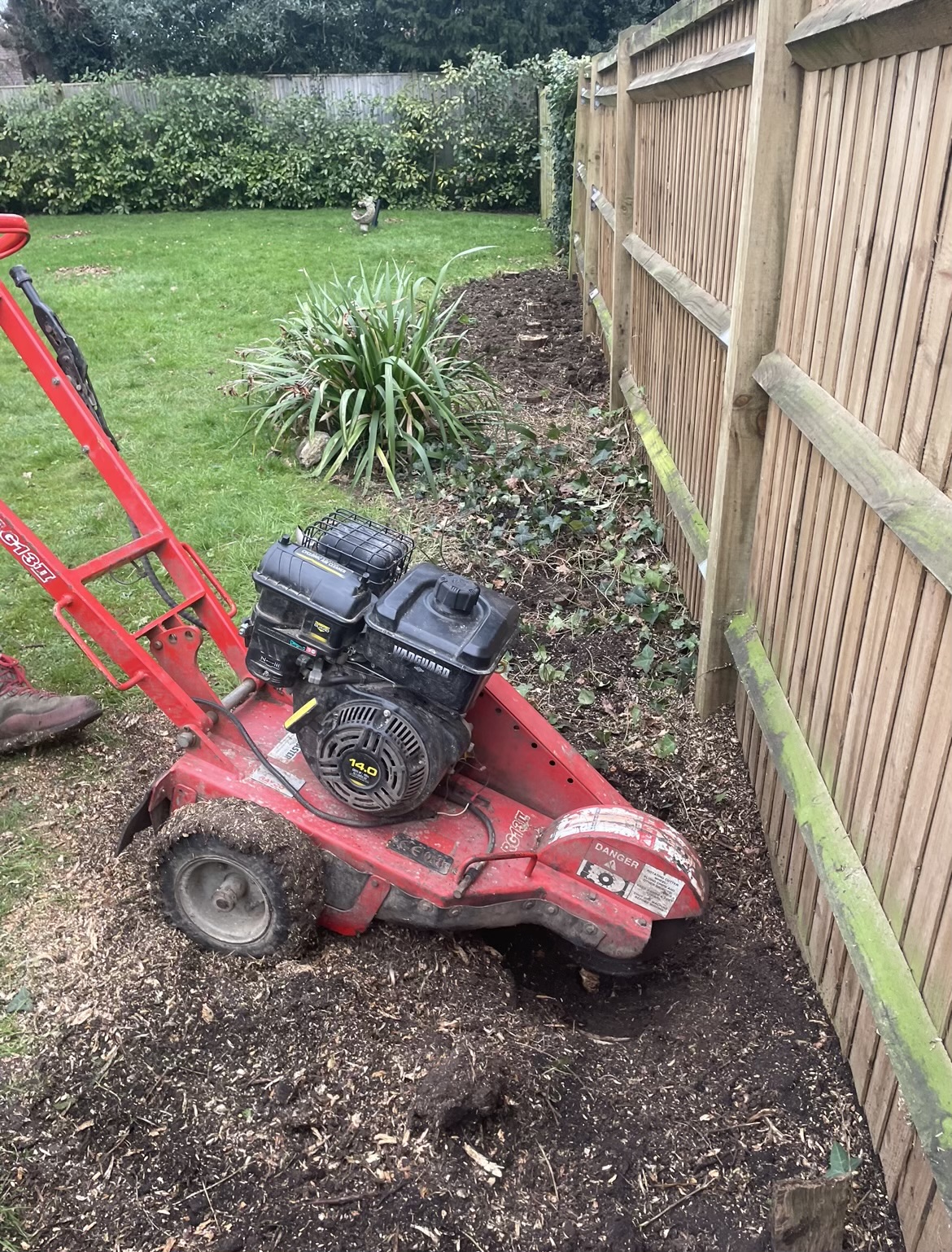
Subsurface grinding removes hazards and prepares land for development or landscaping, restoring safe and usable ground for future planning.

If storm damage has left stumps and debris in unsafe areas, emergency support helps make the site safe and plan the next steps.
When a tree becomes a hazard, waiting can turn a manageable problem into serious damage. Hanging branches, fallen trees, and split stems can fail without warning, especially after storms and heavy rain. You need a calm, safe response that makes the area secure and clears debris properly, so you can get back to normal quickly.
If you are concerned about a tree or storm damage, call 01403 613789 now. Emergency support is available 24/7, with fully qualified help for making safe work, controlled removal, and site clean-up. Service coverage includes Horsham, Southwater, Mannings Heath, and Cranleigh.
Customers often also need Tree surgery, Stump grinding, Hedge cutting, Garden clearance, Grounds maintenance. We cover local areas including Guildford, Epsom, Cranleigh, Horley, Woking, Croydon, Dorking, Haywards Heath, Horsham, Godalming. For help choosing the right service, contact SD Tree Care.